Quesnelia
10 species in the reference · family Bromeliaceae · 3 with a habitat climate · 9 grown, per iNaturalist, 1 not counted
About the genus
Quesnelia is a genus of flowering plants in the family Bromeliaceae, subfamily Bromelioideae. The genus is named after French businessman and patron of botany Edouard Prosper Quesnel, of Le Havre (1781–1850). Endemic to eastern Brazil, this genus contains 22 known species. This genus has two recognized subgenera: the type subgenus and Billbergiopsis Mez.
Quoted from Wikipedia, "Quesnelia", its opening paragraph, revision 1354832640, read 2026-11-08, CC BY-SA 4.0.
Where Quesnelia is native
| Brazil Southeast | 9 |
|---|---|
| Brazil South | 4 |
Species native to each region. A species counts in every region it is native to. Native ranges: Kew's World Checklist of Vascular Plants (Govaerts et al., CC BY 4.0), file of 4 June 2026.
10 species
Quesnelia
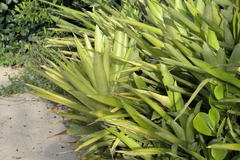 Quesnelia quesneliana Photo: CC0, filipeprates
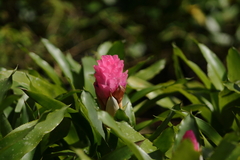 Quesnelia testudo Photo: CC BY, Carlos Alexandre Mattos Raposo
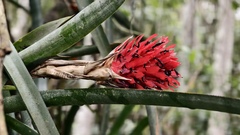 Quesnelia arvensis Photo: CC BY, fmunoz
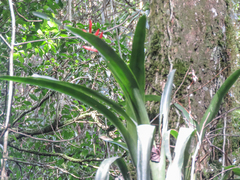 Quesnelia liboniana Photo: CC BY, Diogo Luiz
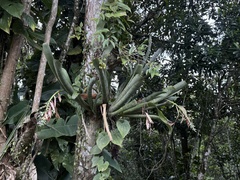 Quesnelia marmorata Grecian urnplant Photo: CC BY, Pedro Alvaro Neves
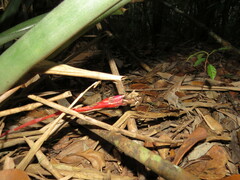 Quesnelia lateralis Photo: CC BY, Victor Farjalla Pontes
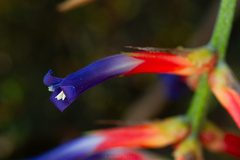 Quesnelia augustocoburgi Photo: CC BY, Pedro Alvaro Neves
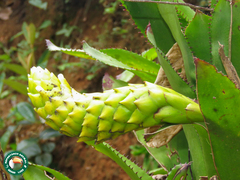 Quesnelia edmundoi Photo: CC BY, Diogo Luiz
 Quesnelia seideliana Photo: CC BY-SA, Timm Stolten
- no open photograph on file Quesnelia humilis
Grown: iNaturalist's observations of the species marked captive or cultivated; "not counted" where the species list does not count it. Native ranges: Kew's World Checklist of Vascular Plants (Govaerts et al., CC BY 4.0), file of 4 June 2026. Grown: iNaturalist's observations marked captive or cultivated, counted 17 October 2026 (the species list's count). Habitat climate known: the species page has a habitat climate, read from CHELSA's monthly climate and NASA POWER's daily extremes at its well-placed wild records inside Kew's native range; each page says its own sources and days. Record low: the lowest night in NASA POWER's daily series at the habitat's typical spot, as the species page gives it, held in °C to a tenth and shown in your units; each page says its own years and day read. Counts as the reference built on 19 November 2026 holds them. The CSV holds every result, not only this page's.