Mexican Pacific Is.
TDWG level-3 region MXI
| Species native here | 141 |
|---|---|
| Native nowhere else | 7 |
| With a habitat climate | 141 |
| Grown, per iNaturalist | 139 (2 not counted) |
| Genera, families | 118, 59 |
Beside it in Mexico: Mexico Central 2,526Mexico Gulf 2,874Mexico Northeast 4,008Mexico Northwest 2,925Mexico Southeast 2,807Mexico Southwest 3,657
Regions: TDWG's World Geographical Scheme for Recording Plant Distributions, 2nd edition (Brummitt 2001); countries' regions as round eighty's shapes assign Natural Earth's states and provinces (public domain). Next door: regions whose outlines touch, read from those shapes (TDWG's own tables give no neighbours).
141 species
Species native to Mexican Pacific Is.
2 more species, whose range Kew gives only as Mexico as a whole, are not counted here: see them there.
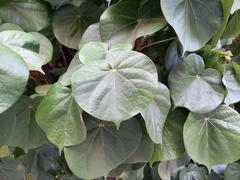 Hibiscus tiliaceus Waru Photo: CC BY, nasua
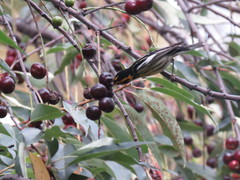 Prunus serotina Black cherry Photo: CC BY, Juan Carlos Caicedo Hernández
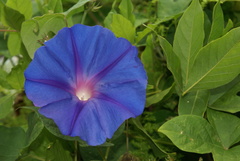 Ipomoea indica Oceanblue morning-glory Photo: CC0, Ina Siebert
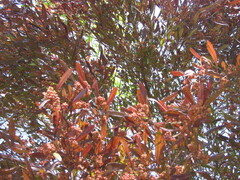 Dodonaea viscosa Hopbush Photo: CC BY, zebedeugalinha
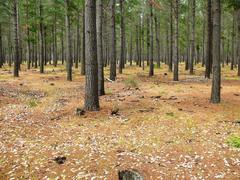 Pinus radiata Monterey pine Photo: CC BY-SA, Tony Rebelo
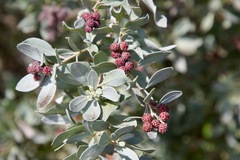 Conocarpus erectus Button mangrove Photo: CC BY, jimsox
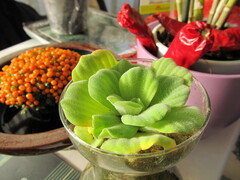 Pistia stratiotes Water lettuce Photo: CC BY, zebedeugalinha
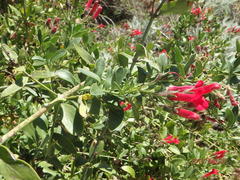 Gambelia speciosa Island Bush Snapdragon Photo: CC BY, Carl Carranza
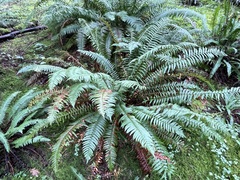 Polystichum munitum Western sword-fern Photo: CC BY-SA, lejones417
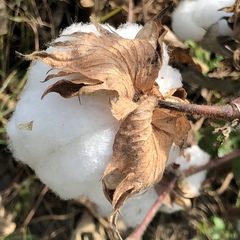 Gossypium hirsutum Cotton Photo: CC BY, libby hepburn
 Sorghastrum nutans Yellow Indian grass Photo: CC0, Lois Diggs
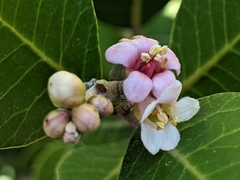 Rhus integrifolia Lemonade sumac Photo: CC BY, Ken-ichi Ueda
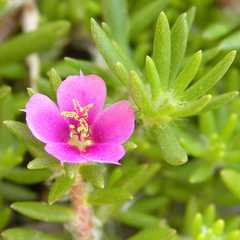 Portulaca pilosa Kiss-me-quick Photo: CC BY, M. Whitson
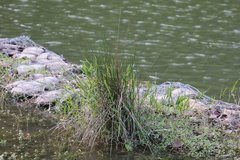 Juncus effusus Soft rush Photo: CC BY, 胡正恆(Jackson Hu)
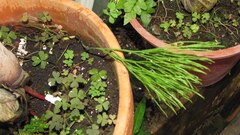 Psilotum nudum Whisk fern Photo: CC BY, zebedeugalinha
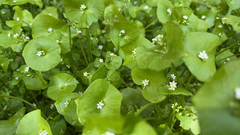 Claytonia perfoliata Photo: CC BY, dennisvo
 Dudleya virens Bright green dudleya Photo: CC BY, Amy
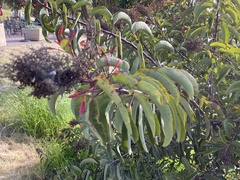 Malosma laurina Photo: CC BY, Darlene Tydlaska
 Lantana velutina Velvet Lantana Photo: CC BY-SA, Douglas Goldman
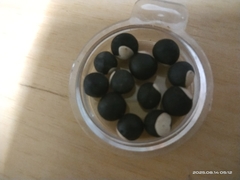 Cardiospermum halicacabum Balloon vine Photo: CC0, yu
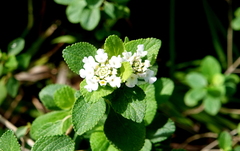 Lantana involucrata Buttonsage Photo: CC BY, Claire Herzog
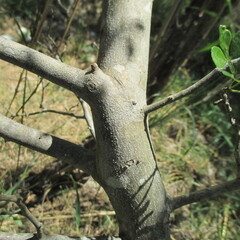 Zanthoxylum fagara Lime prickly-ash Photo: CC BY, Ricardo Jaimes-López
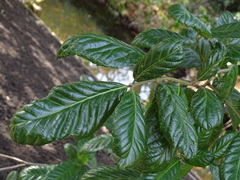 Quercus tomentella Island oak Photo: CC BY-SA, Grzegorz Grzejszczak
 Phaseolus lunatus Sieva bean Photo: CC BY, 謝麗霦
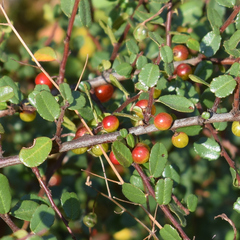 Rhamnus crocea Redberry Buckthorn Photo: CC0, Anne Parsons
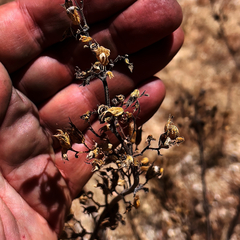 Lepechinia hastata Baja Pitcher Sage Photo: CC BY, Bill Levine
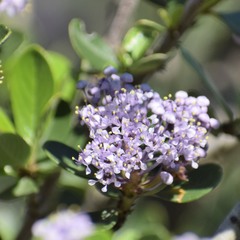 Ceanothus cuneatus Buckbrush ceanothus Photo: CC0, Anne Parsons
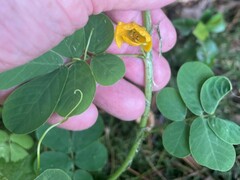 Senna obtusifolia Java-bean Photo: CC BY-SA, lejones417
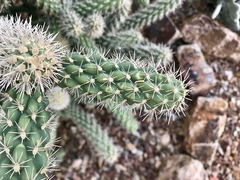 Cylindropuntia prolifera Coast Cholla Photo: CC BY, CK2AZ
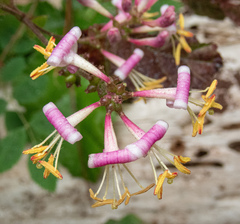 Lonicera hispidula Photo: CC BY, Don Loarie
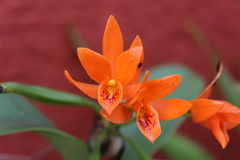 Guarianthe aurantiaca Orange cattleya Photo: CC BY, Ricard Busquets Reverte
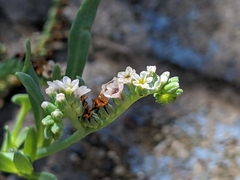 Heliotropium curassavicum Seaside heliotrope Photo: CC BY, Ken-ichi Ueda
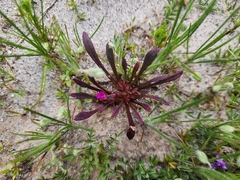 Calandrinia ciliata Red-maids Photo: CC BY, GREGORY ANTHONY PAUCA TANCO
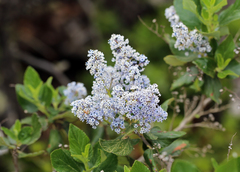 Ceanothus arboreus Felt-leaf ceanothus Photo: CC BY, Steve Matson
 Spirodela polyrhiza Greater duckweed Photo: CC BY, Victor Engel
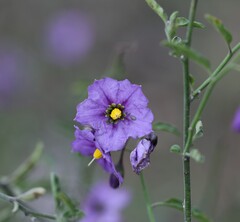 Solanum umbelliferum Bluewitch nightshade Photo: CC BY, nmoorhatch
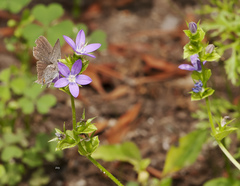 Triodanis perfoliata Clasping Venus' looking-glass Photo: CC BY, Seig
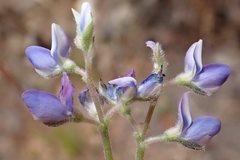 Lupinus bicolor Miniature lupine Photo: CC0, John Cowles
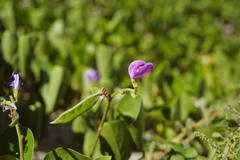 Canavalia rosea Bay-bean Photo: CC BY, Cheng-Tao Lin
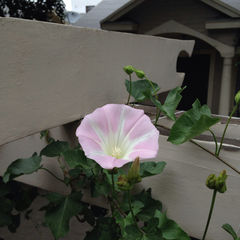 Convolvulus macrostegius Photo: CC BY, Casey Schreiner
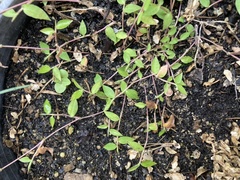 Oplismenus hirtellus Basket grass Photo: CC BY, Chris Parminter
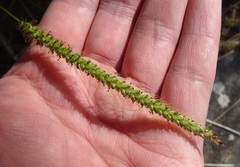 Setaria parviflora Knotroot bristle-grass Photo: CC BY, Y. Liu
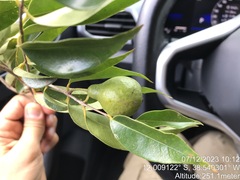 Psidium oligospermum Sintenis' guava Photo: CC BY-SA, vitordematos12
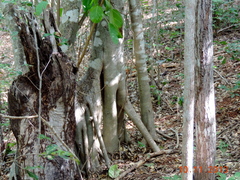 Ficus cotinifolia Alamo tree Photo: CC BY, Francisco Farriols Sarabia
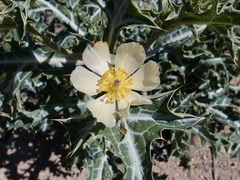 Argemone ochroleuca Mexican-poppy Photo: CC BY, Sue Carnahan
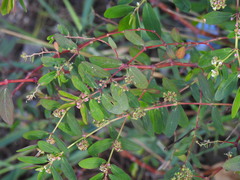 Euphorbia hypericifolia Graceful sandmat Photo: CC BY, Duarte Frade
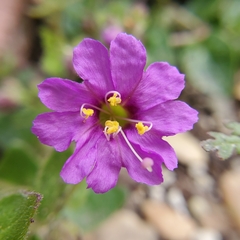 Mirabilis laevis Desert wishbone-bush Photo: CC0, John Cowles
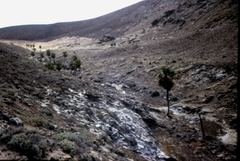 Brahea edulis Guadalupe Palm Photo: CC BY, Jose Luis Leon de la Luz
Grown: iNaturalist's observations of the species marked captive or cultivated; "not counted" where the species list does not count it. Native ranges: Kew's World Checklist of Vascular Plants (Govaerts et al., CC BY 4.0), file of 4 June 2026. Grown: iNaturalist's observations marked captive or cultivated, counted 17 October 2026 (the species list's count). Habitat climate known: the species page has a habitat climate, read from CHELSA's monthly climate and NASA POWER's daily extremes at its well-placed wild records inside Kew's native range; each page says its own sources and days. Record low: the lowest night in NASA POWER's daily series at the habitat's typical spot, as the species page gives it, held in °C to a tenth and shown in your units; each page says its own years and day read. Counts as the reference built on 19 November 2026 holds them. The CSV holds every result, not only this page's.